
The Digital Euro at a Crossroads: Europe's Critical Vote on Financial Sovereignty
Von Svetlana Alexeeva
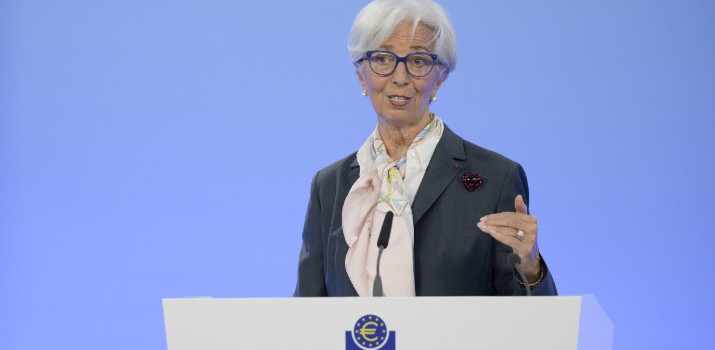
In late January 2026, the European Parliament's ECON Committee will hold crucial discussions on the future of the digital euro. At stake is far more than just a new payment method - it's a question of whether Europe will maintain sovereignty in an increasingly digitalised world. The committee will review the European Central Bank's recent draft report on establishing a retail digital euro, released in October 2025. The upcoming vote is expected to be close, reflecting deep divisions over the project's scope and implementation. If the regulation is adopted by the European Parliament in late 2026, the ECB could launch the digital euro by 2029.
Why Financial Sovereignty Matters
An electronic equivalent to cash represents Europe's bid to preserve public money in the digital age. First of all, because efficiency matters: a pan-European payment method can work seamlessly across all eurozone countries without fees benefiting consumers and businesses. The strategic implications run even deeper. Currently, European digital payments flow predominantly through US-based major payment networks like Visa, Mastercard, and PayPal. A digital euro would reduce this dependence on foreign payment infrastructure and Big Tech platforms, giving Europe's central bank its own digital currency. It would also provide the ECB with an innovative monetary policy tool.
International Approaches to Central Bank Digital Currencies
Europe is far from alone in exploring this path. About 137 countries and currency unions are exploring Central Bank Digital Currencies (CBDCs). China's digital yuan is already being tested in several cities, demonstrating that sovereign digital currency is becoming a geopolitical reality.
Russia has adopted a much more aggressive approach than the West. From January 1, 2026, federal government departments are permitted to use the digital ruble for certain budget payments. Large-scale rollout is scheduled to begin by September, with mandatory merchant acceptance phased in over subsequent years. This top-down rollout - amid public resistance and surveillance concerns - stands in sharp contrast to Europe's strategy.
The United States has taken a radically different direction. Under President Donald Trump's administration, Washington has moved decisively away from creating and promoting a digital dollar. Instead of a government-issued CBDC, the US is favoring private innovation, allowing commercial companies to create dollar-denominated stablecoins rather than having the Federal Reserve issue digital currency directly. Prior to this, there were worries that a CBDC could allow the central bank to bypass commercial banks, potentially destabilizing the financial system. Critics also raised concerns about government surveillance.
The Stakes for Europe
Europe now faces a defining choice. Will it follow the US toward privatised digital money, risking dependency on foreign tech platforms and, as a consequence, financial sovereignty? Because China's or Russia's state-controlled models are not an option, the EU will probably chart a middle path: a public digital currency designed with democratic safeguards, privacy protections, and genuine public benefit. The January discussions in the ECON Committee are just one step in this journey, but they will help determine whether Europe preserves its resilience and sovereignty or cedes it to private corporations and foreign powers.
Author's Contact: Svetlana.Alexeeva [at] digital-insight [dot] de
2026-01-16







BOTSCHAFTER IN BERLIN
Hier finden Sie alle wichtigen Informationen über die ausländischen Botschaften in Berlin von A wie Afghanistan bis Z wie Zypern. Schauen Sie doch mal rein unter www.botschafter-berlin.de.
MONATSBRIEF
Wenn Sie sich für unseren kostenlosen Monatsbrief anmelden möchten, senden Sie bitte eine Nachricht.
LESER ÜBER UNS








Impressum | Datenschutzerklärung
© Diplomat Media Berlin 2017 —